September 17, 2026
Recover Costs in 7 Years: Package Locker Fee for Property Managers
Model a cost backed package locker amenity fee, amortize capital over seven years, build resident support, and reduce junk fee risk.
Charge a package locker amenity fee only when it recovers a documented cost and residents can see the payoff. The recommended default: price it to cost, disclose it in plain terms in the lease, and lean toward opt-in or tiered access instead of a blanket mandatory charge. Locker Solutions builds a cost calculator into its planning process specifically so teams can model this before committing.
TL;DR:
- Charging a package locker amenity fee requires documentation of actual costs, such as hardware, install, software, and operations, divided by occupied units over their useful life.
- A tiered or opt-in fee model is preferable to flat pricing, allowing residents to choose services like refrigerated storage and reducing complaints about mandatory charges.
- Transparent disclosure in the lease, including cost breakdown, start date, opt-in process, and cancellation terms, is essential to avoid regulatory issues and perceived hidden fees.
- Lockers can typically be installed within 2 to 6 weeks, with early planning for site survey, procurement, and wiring crucial to avoid delays; billing can be integrated into rent or billed separately.
- Modeling costs with a dedicated calculator helps determine a realistic monthly fee, and vendor financing or cost-sharing options can lower upfront expenses while impacting control and flexibility.
Table of Contents
- What Costs Actually Belong in a Package Locker Amenity Fee?
- Which Fee Structure Fits Your Property?
- How Do You Disclose the Fee Without Triggering Junk-Fee Complaints?
- What’s the Realistic Timeline From Procurement to Launch?
- How Do You Know If the Fee Is Working?
- Can You Share the Cost With a Vendor or Third Party?
- How Should Fee Escalation and Periodic Review Work?
- How Does a Locker Fee Fit Into HOA or Existing Property Fee Structures?
- Locker Solutions’ Checklist for Fee-Backed Deployments
- Ready to Model Your Own Package Locker Amenity Fee?
- Sources
- FAQ
What Costs Actually Belong in a Package Locker Amenity Fee?
A package locker amenity fee should map to real line items, not a round number pulled from a competitor’s rent roll. Start with the capital side. Hardware costs vary by configuration, but the categories are consistent: locker banks or kiosks, any package room buildout (walls, flooring, lighting), and refrigerated units if the property handles groceries or meal kits at volume.
Installation and integration costs sit next to hardware. This includes white-glove install labor, electrical runs, network drops, access control hardware, and PMS software integration so packages tie to resident profiles automatically. Software licensing and recurring vendor fees follow: most electronic locker systems charge an annual or monthly platform fee on top of the hardware.
Then there’s operations. Someone has to restock label paper, handle jammed doors, process returns, and answer the “my package isn’t showing up” call. Some properties absorb this into existing staff hours; others contract on-site package management so a dedicated team handles daily operations instead of leasing staff.
- Capital: locker hardware, kiosks, package room buildout, refrigeration units
- Install: white-glove labor, electrical, network, access control, PMS integration
- Software: platform licensing, recurring vendor fees
- Operations: staffing hours or contracted package room management
Here’s the formula that turns those categories into a defensible fee. Take total project cost, amortize it over a useful life (seven years is a common benchmark for electronic locker hardware), add annual operations and maintenance, then divide by occupied units.
Example: a system amortized over a common useful life runs a certain amount per year in capital recovery. Adding annual operations and maintenance results in a total yearly cost. Dividing this across occupied units gives a modest monthly charge per unit. Financing changes the math: full financing lowers the up-front capital outlay but raises the annual cost line, since you’re paying interest instead of amortizing a paid-off asset. Model both scenarios before you set a number.
Which Fee Structure Fits Your Property?
Amenity fee models generally fall into four buckets, and industry guidance on fee structures points to flat, bundled, tiered, and hybrid approaches as the standard menu. Each one carries a different resident-acceptance profile.
- Flat, all-access fee. Every resident pays the same amount regardless of how often they use the lockers. It’s the simplest to administer, but it’s also the model most likely to draw complaints from residents who rarely receive packages.
- Bundled package. The locker fee gets folded into a broader amenity bundle covering things like a fitness center or business lounge. This works well when the property already charges a general amenity fee and wants to avoid adding a new line item.
- Tiered or opt-in. Residents choose a service level, sometimes with a free basic tier (standard locker access) and a paid tier (refrigerated storage, expedited retrieval). This is the model that best avoids the appearance of a mandatory add-on.
- One-time capital assessment. Instead of a recurring charge, some HOAs or condo associations levy a single special assessment to cover installation, then fold minor ongoing O&M into the existing operating budget.
A property with a $43,700 annual cost (from the example above) spread across 200 units could charge $1.50 a month flat, or set a $3 monthly opt-in fee for a premium tier (refrigerated + expedited) while keeping standard locker access free. Both recover the underlying cost. The second version just distributes it based on actual usage.
Pro Tip: Run the fee as an opt-in pilot for six to twelve months before rolling it out property-wide. You’ll get real opt-in rate data instead of guessing, and you can adjust pricing before it’s locked into every lease.
How Do You Disclose the Fee Without Triggering Junk-Fee Complaints?
Disclosure timing and wording determine whether a fee reads as fair value or a hidden charge. Line-item transparency is the baseline: residents should see exactly what the fee covers, when it starts, whether it’s opt-in, and what happens if they cancel or move out mid-cycle.
Build the disclosure into the lease itself, not just a separate email. A dedicated amenity fee addendum, paired with a plain-language summary in the welcome packet, covers both the legal requirement and the practical one. Announce new fees well before the billing cycle starts, and use multiple channels: resident portal notices, email, physical signage near the locker bank, and, where the property has one, an app push notification.
- Line-item breakdown: what the fee covers, exact monthly or annual amount
- Start date and billing cycle alignment with lease terms
- Opt-in enrollment process, if applicable
- Cancellation and refund terms
Recent enforcement action from the FTC on hidden fees in real estate and consumer transactions has made regulators more aggressive about disclosure gaps, and multifamily-specific guidance draws a direct line between transparent cost coverage and avoiding the junk-fee label. Surveying residents before you set a price is worth the extra step: it tells you whether the market will bear the fee before you’ve already committed to charging it, rather than after the complaints start.
What’s the Realistic Timeline From Procurement to Launch?
A package locker rollout generally follows a predictable sequence, with low-friction installs often completing within a few weeks from signed order to resident onboarding.
- Capacity planning. Count units, estimate daily package volume, and decide indoor vs. outdoor placement and whether refrigerated capacity is needed.
- Site survey. Confirm power access, network drops, and a location that satisfies ADA clearance requirements and sightlines for signage.
- Procurement. Lock in warranty terms, service-level agreements, and financing terms before signing, not after.
- Installation. White-glove crews handle electrical, mounting, network configuration, and access control setup on-site.
- Acceptance testing. Verify PMS integration, label scanning, and alert delivery before residents get access.
- Resident onboarding. Roll out credentials, send usage instructions, and post signage at the unit.
Billing needs a decision early in this process: fold the fee into the existing rent-roll billing system, or bill it as a separate amenity line item. Rent-roll integration simplifies collections but can obscure the fee’s specific purpose on a resident’s statement; a separate line item is more transparent but requires its own reporting cadence. Either way, get the accounting treatment settled with your finance team before go-live, not during the first billing cycle. Site prep is worth flagging to your electrical contractor early, since low-voltage and network runs are frequently the pacing item on an install; a property manager’s guide to site electrical planning is a useful reference for that conversation.
How Do You Know If the Fee Is Working?
Three categories of metrics tell you whether a package locker amenity fee is earning its place: operational, financial, and resident acceptance.
- Operational: locker utilization rate, average pickup speed (same-day vs. next-day), and incident rate (jammed doors, misdeliveries).
- Financial: monthly fee revenue against actual O&M spend, and progress toward the amortized payback point.
- Resident acceptance: opt-in percentage if the model is tiered, survey satisfaction scores, and complaint volume tied specifically to the fee.
Set a decision threshold before launch, not after.
Can You Share the Cost With a Vendor or Third Party?
Not every property needs to fund a locker system entirely out of capital budget. Vendor financing is the most common alternative: spreading hardware and install costs over a multi-year term converts a large capital outlay into a predictable annual line, which can make the project pencil out even when reserve funds are tight.
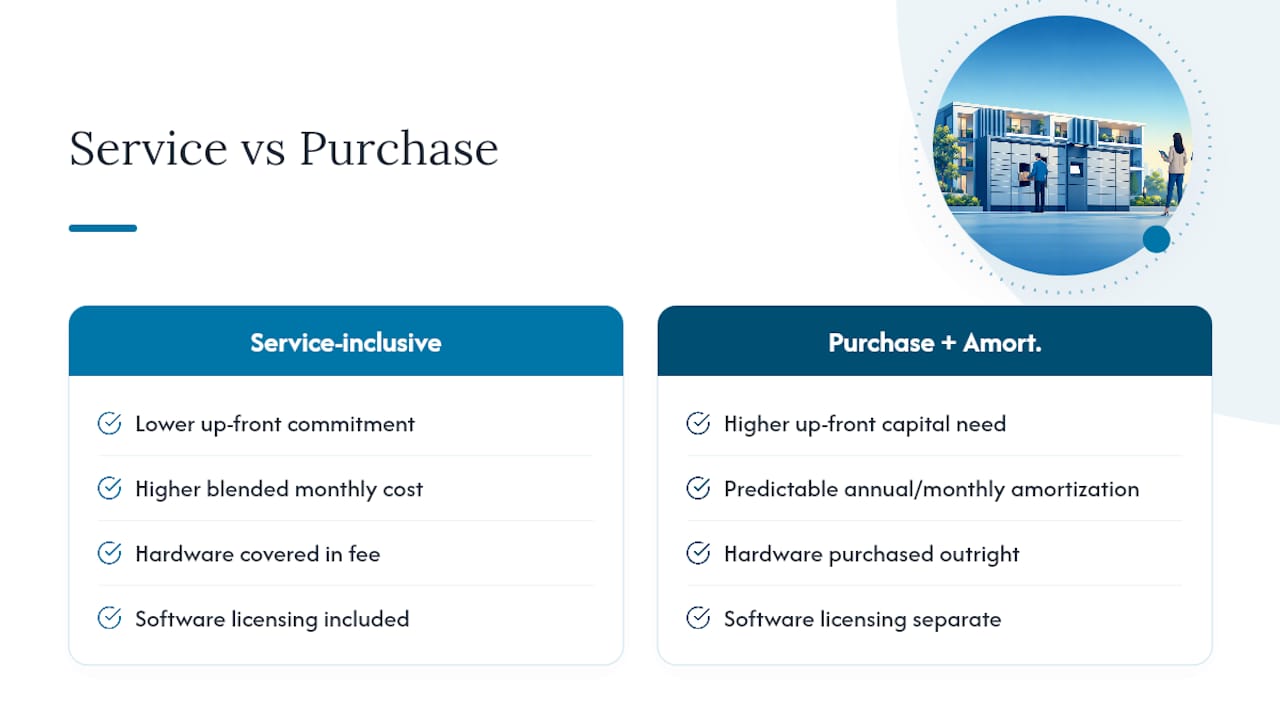
Some vendors also offer service-inclusive models, where a monthly fee bundles hardware, software licensing, and maintenance into a single payment rather than separate capital and O&M tracks. That structure trades a lower up-front commitment for a higher blended monthly cost, so it’s worth modeling against a straight-purchase-plus-amortization scenario before choosing.
Cost-sharing with adjacent stakeholders is less common but worth considering on mixed-use or larger campus properties. If a property includes retail or commercial tenants who also receive high delivery volume, splitting locker capacity and cost proportionally can lower the per-unit burden on residential tenants. Developers building multiple properties under one ownership group can sometimes negotiate portfolio-wide vendor pricing that beats a single-property quote.
The tradeoff across all of these models is control. Financing and service-inclusive contracts reduce up-front cash needs but usually come with longer commitment terms and less flexibility to renegotiate mid-contract. Read the SLA and cancellation terms as carefully as the price sheet, since a locked-in five-year service term can outlast your investment horizon on the property.
How Should Fee Escalation and Periodic Review Work?
A package locker amenity fee set today won’t cover the same costs in five years. Software licensing tends to rise annually, maintenance parts and labor track general inflation, and staffing costs for on-site package management climb with regional wage trends. Building an escalation clause into the initial lease addendum, rather than trying to introduce one later, avoids a harder conversation down the line.
Some operators instead build in a periodic review, every 12 to 24 months, comparing actual O&M spend against fee revenue and adjusting only when the gap crosses a set threshold.
Whichever method you pick, disclose it up front. A fee that quietly jumps without warning is the exact pattern that draws junk-fee complaints and, in some cases, regulatory attention. Time the review cycle to your broader rent renewal calendar so residents get one consolidated notice rather than separate updates for rent and amenities throughout the year.
How Does a Locker Fee Fit Into HOA or Existing Property Fee Structures?
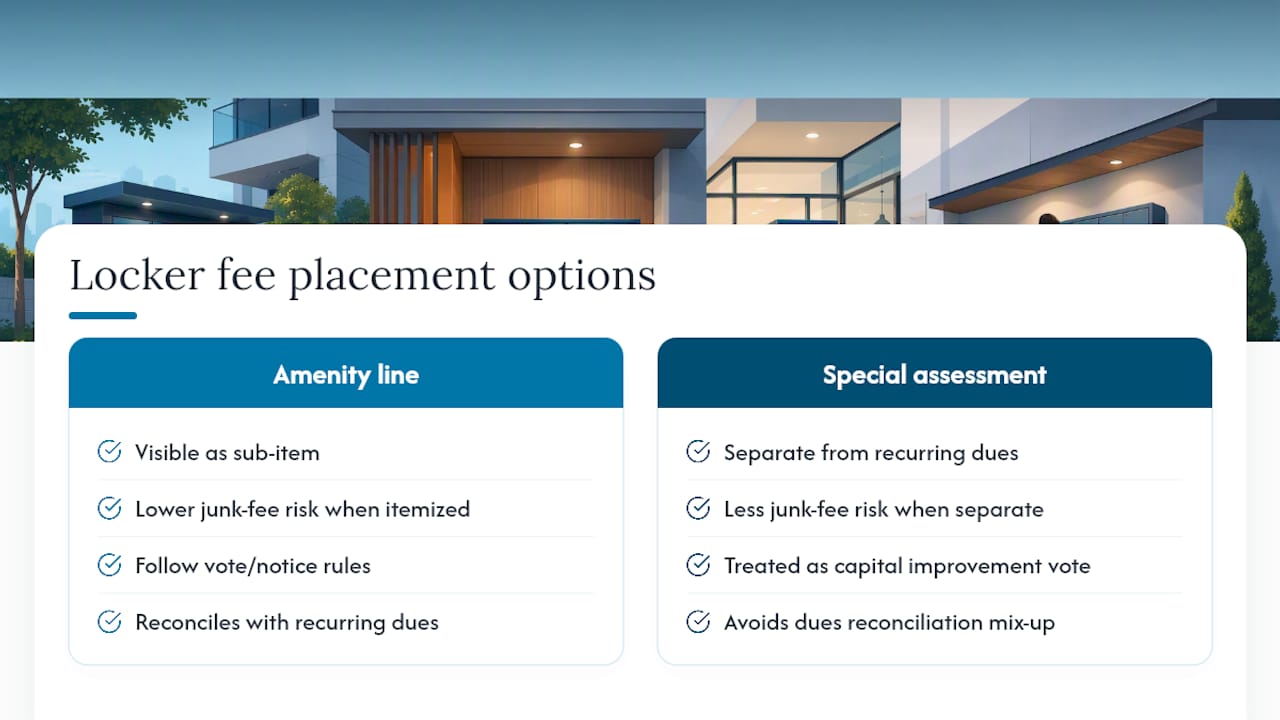
For HOAs and properties that already collect a general amenity or association fee, a package locker charge needs a clear home in that structure rather than becoming an unexplained addition. Folding it into the existing amenity line, with a sub-item breakdown showing the locker allocation, keeps the statement simple while preserving transparency.
Where the property runs a single blended amenity fee covering a pool, fitness center, and common areas, adding lockers without itemizing the change is the scenario most likely to trigger junk-fee scrutiny, since residents can’t tell what they’re now paying for that they weren’t before. Boards and management companies should treat a locker rollout the same way they’d treat any capital improvement assessment: with a vote or notice period consistent with the association’s governing documents, and a specific accounting of what changed.
One-time special assessments work differently than recurring dues increases, and mixing the two without clarity creates confusion at reconciliation time. If the locker system is capital-funded through a special assessment, keep it separate from the recurring dues line, and note in board communications when the assessment is expected to be paid off. That distinction matters at resale, too, since buyers and their agents often ask whether a special assessment is still active.
Locker Solutions’ Checklist for Fee-Backed Deployments
A fee-backed locker program works best when the implementation itself is predictable. Locker Solutions supplies indoor and outdoor electronic lockers, refrigerated units, automated package rooms, and unified access control, paired with white-glove installation and local maintenance support, so the operational side of the fee equation isn’t a variable you’re guessing at.
Before signing with any vendor, verify four things: the SLA response time for hardware issues, the exact financing terms and any rate lock, warranty length on hardware, and whether local technicians handle service calls or you’re waiting on a national queue.
— Locker Solutions
Ready to Model Your Own Package Locker Amenity Fee?
Guesswork on capital and O&M costs is the single biggest reason locker fees end up mispriced, either too high for what residents get or too low to actually cover maintenance. Locker Solutions built its cost calculator so you can plug in unit count, configuration, and financing terms and see a realistic monthly number before you draft a single lease addendum.
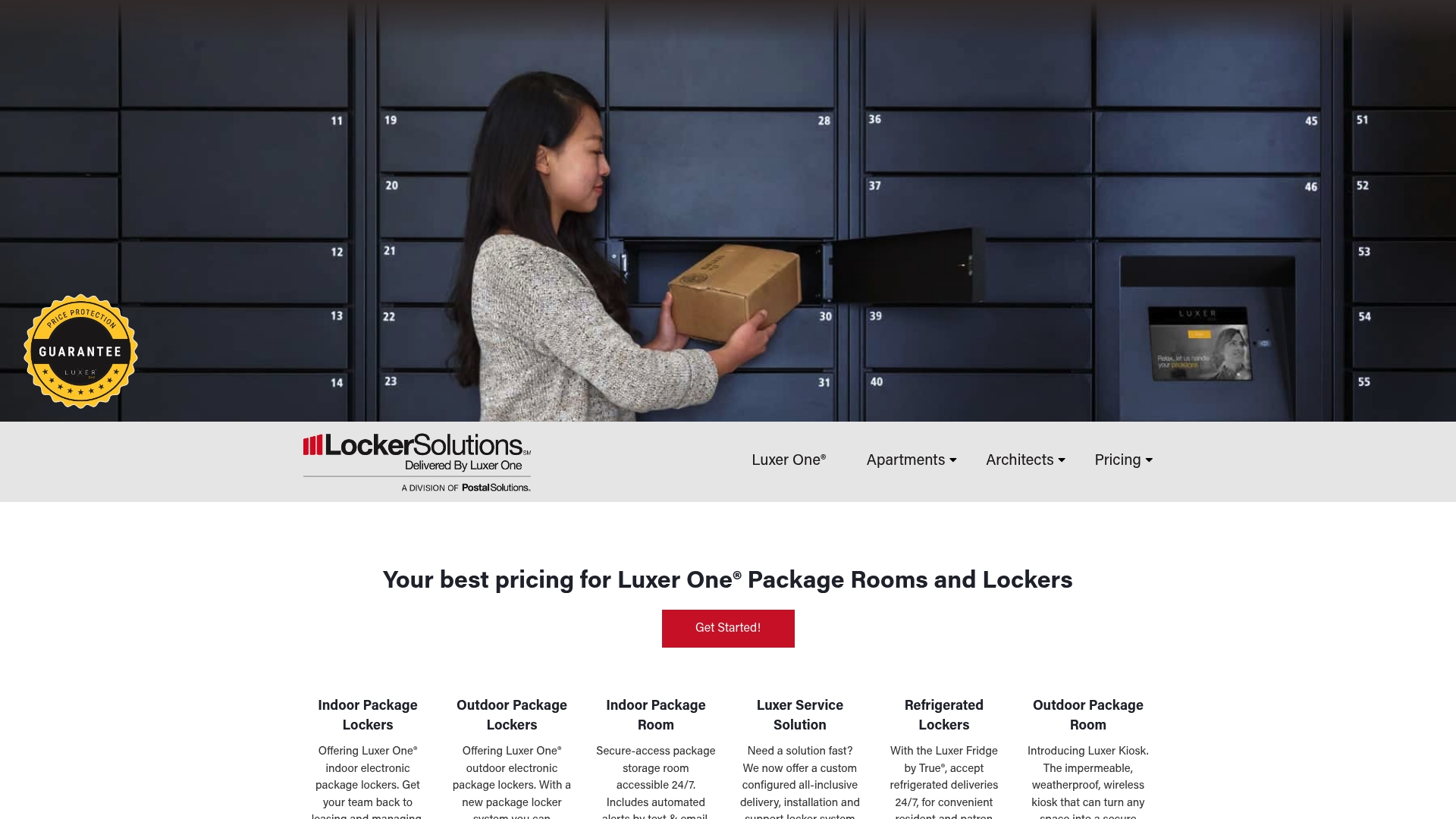
Beyond the calculator, Locker Solutions offers the full deployment stack: indoor lockers, outdoor kiosks, and smart package rooms, refrigerated units for grocery and meal-kit volume, and unified access control that ties locker credentials to the same system residents already use for building entry. Properties that would rather not staff daily operations in-house can hand that off through on-site package management, with white-glove installation handling the physical rollout end to end.
If you’re weighing whether a fee makes sense for your property, the calculator is the fastest way to get a real number instead of a guess. Run your unit count and configuration through it, then request a site assessment to confirm the estimate against your property’s actual layout.
Sources
- The Difference For Residents: "Junk” Fees vs. Premium Amenities - The Multifamily Journal
- Amenity Fees Guide: Examples & Charging Tips
- How To Choose Amenities Part 5 - Package Delivery - Victor Menasce
FAQ
Is a Package Locker Amenity Fee Legal to Charge?
Charging a fee is generally permissible when it’s clearly disclosed in the lease, tied to a real cost or service, and not misrepresented as mandatory if it’s optional. Recent FTC enforcement on hidden fees means the disclosure details, not the fee itself, are usually where legal risk shows up.
How Do You Calculate a Fair Monthly Package Locker Fee?
Amortize total project cost over the system’s useful life (commonly seven years), add annual operations and maintenance costs, then divide by occupied units. A system amortized over a common useful life with annual operations and maintenance costs across occupied units results in a modest monthly charge per unit.
Should the Fee Be Mandatory or Opt-In?
Opt-in or tiered models reduce junk-fee complaints and give residents choice, which survey data suggests matters, since residents often resist mandatory recurring fees for services that feel like add-ons rather than core infrastructure.
How Long Does a Package Locker Installation Take?
Common low-friction installs run 2 to 6 weeks from signed order to resident onboarding, covering site survey, installation, acceptance testing, and credential rollout. Some vendors build their deployment process around a 2 to 6 week window and offer white-glove installation.
What Does Locker Solutions Charge for Package Lockers?
Locker Solutions doesn’t publish flat pricing since costs depend on unit count, configuration, and financing terms; current estimates are available through its cost calculator or by requesting a site assessment.
Recommended
Ready for a Luxer One® package locker quote?
Tell us your unit count and we'll send right-sized pricing with a fast response time.
Get my free quote