Parcel locker guide
What is a parcel locker?
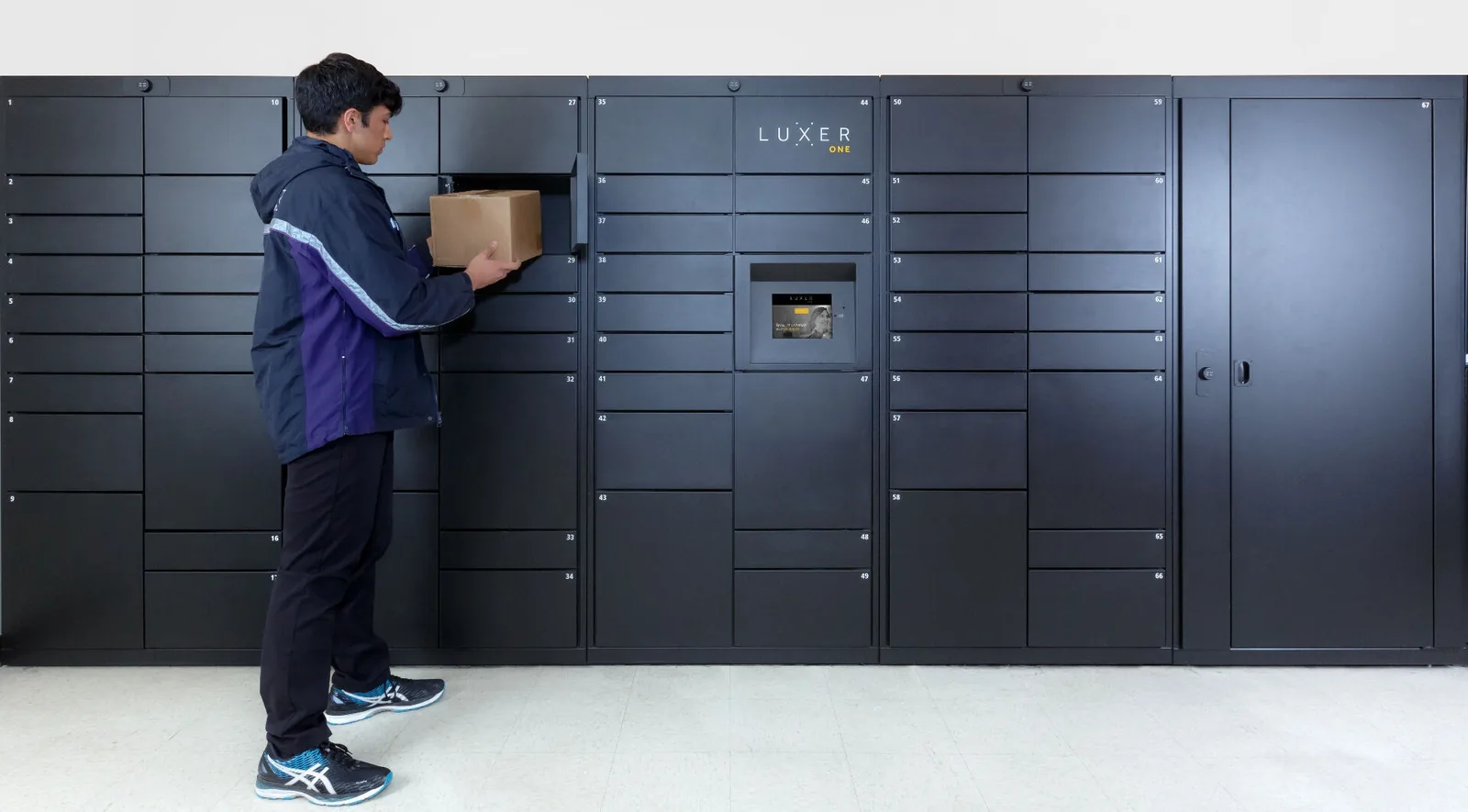
A parcel locker is a secure, automated bank of compartments where delivery carriers drop packages and residents retrieve them with a one-time code or app. Resident parcel lockers are the modern replacement for the front-desk package pile in apartment buildings, condos, and student housing.
Parcel locker definition
In the simplest terms, a parcel locker is a piece of smart mailroom furniture: a wall or kiosk of lockable compartments connected to a software platform. When a package arrives, the carrier scans the shipping label at the terminal. The locker reads the recipient, assigns a compartment that fits the item, and alerts the resident to pick it up.
For multifamily properties, the term is used interchangeably with package locker, apartment locker, or smart locker. The key difference from a USPS parcel locker is that a multifamily system accepts packages from every major carrier and logs every pickup for the property manager.
Quick summary
- Secure, locked compartments
- Accepts all major carriers
- Auto-notifies residents
- Logs every delivery
- 24/7 resident pickup
Need a parcel locker system for your property?
Tell us your unit count and location. We’ll recommend the right indoor, outdoor, or refrigerated configuration and send a written quote.
How it works
How does a parcel locker work?
The entire drop-off and pickup cycle is automated. Carriers need no training, and residents never have to wait for the office to open.
Read the full step-by-step workflowCarrier scans the label
At the kiosk, the carrier scans the package label. AI reads the address and unit number.
Locker assigns a compartment
The system picks an empty compartment that fits the package and unlocks only that door.
Resident gets notified
A text, email, and app push notify the resident with a one-time pickup code.
Resident picks up
The resident enters the code or taps the app; the door opens, and the log is updated.
Types
Types of parcel lockers for apartments
The right configuration depends on your building layout, climate, and delivery mix. Most properties use one type; larger portfolios often mix two or three.
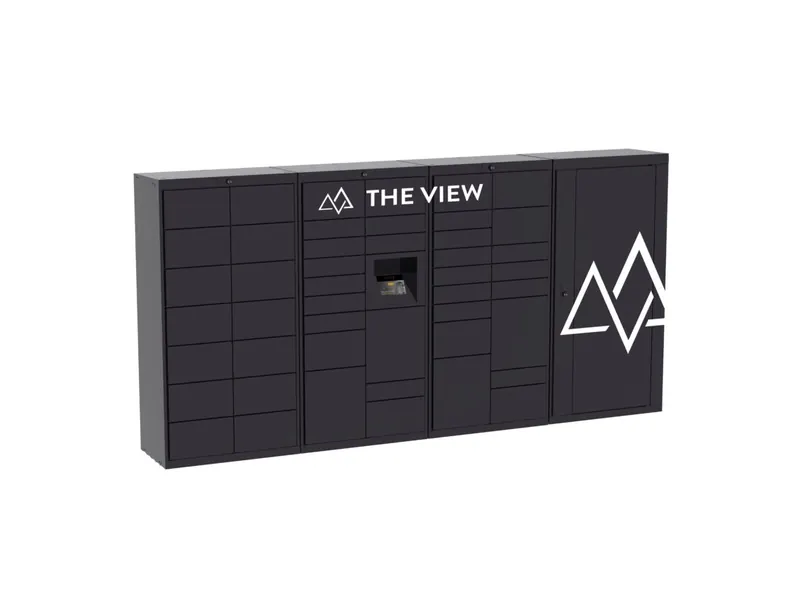
Indoor parcel lockers
Lobby or mailroom banks sized by unit count, with small, medium, large, and extra-large compartments.
Learn more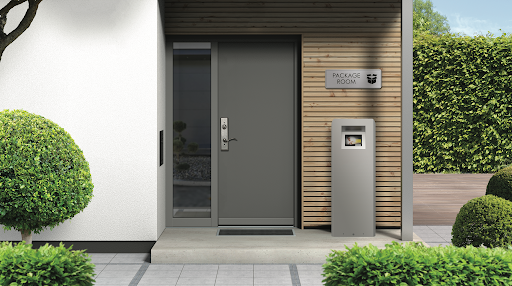
Outdoor parcel lockers
Weatherproof exterior kiosks for garden-style apartments, student housing, or properties with no staffed lobby.
Learn more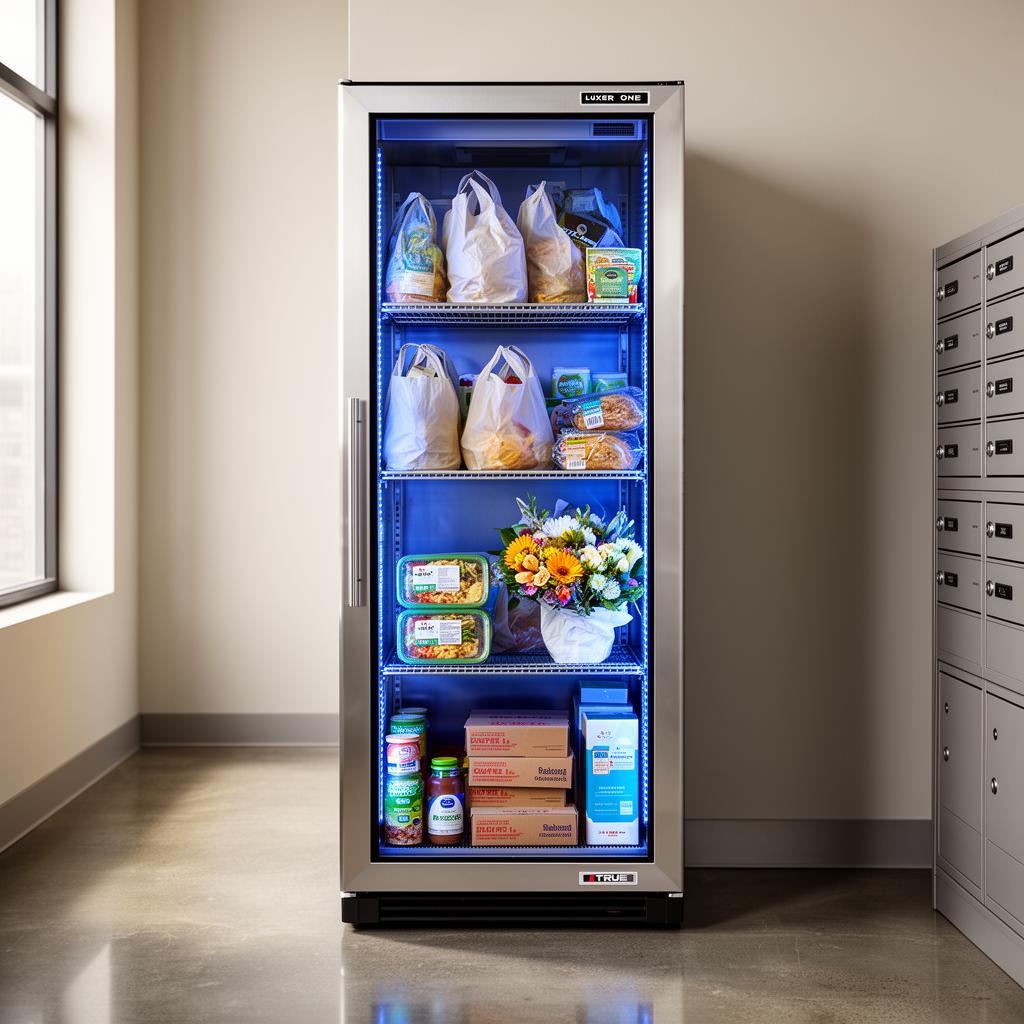
Refrigerated lockers
Ambient, refrigerated, and frozen zones for grocery, meal-kit, and pharmaceutical deliveries.
Learn more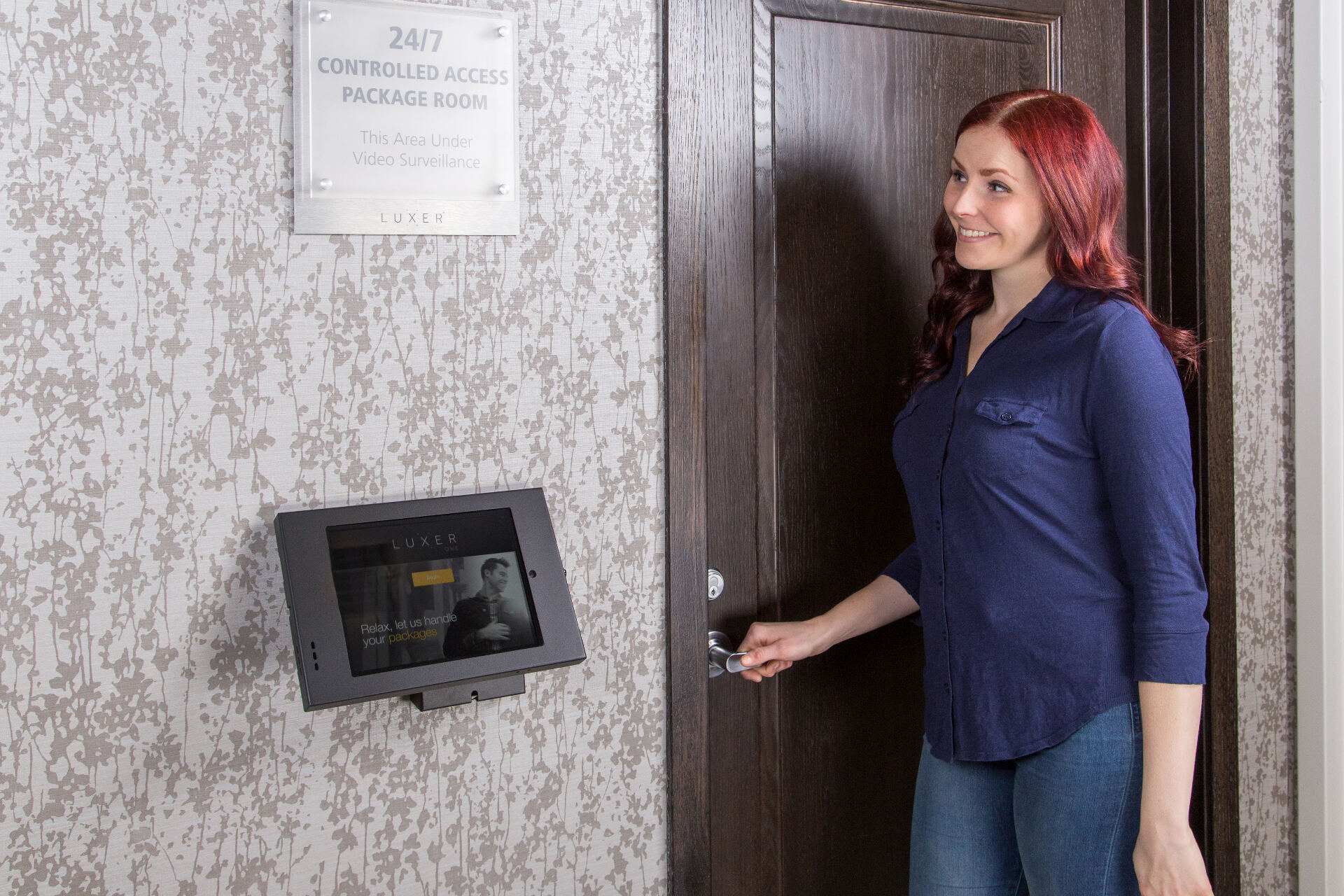
Smart package rooms
Convert an existing room into a secure, camera-monitored delivery room with carrier credentialing.
Learn moreBenefits
Why apartments use parcel lockers
Accepts 100% of carriers
USPS, UPS, FedEx, Amazon, DHL, and grocery couriers all use the same carrier workflow.
Automated resident notifications
Text, email, and app alerts include a one-time pickup code and delivery photo.
Chain of custody logging
Every scan, drop-off, and pickup is timestamped and tied to a user or carrier.
24/7 pickup without staff burden
Residents retrieve packages on their schedule; leasing staff stay focused on leasing.
Package theft prevention
Locked compartments eliminate the lobby pile and reduce theft and misdelivery.
Amenity and retention driver
Grocery, cold, and oversized delivery options differentiate your property at lease-up and renewal.
Compare Luxer One® to other parcel locker systems
See how indoor, outdoor, refrigerated, and package-room options compare on price, carriers, and resident experience.
USPS parcel lockers vs. apartment parcel lockers
A USPS parcel locker is a small bank of compartments installed next to cluster mailboxes, used only by postal carriers for oversized mail. It is free to the property but limited to USPS and offers no software, notifications, or tracking.
An apartment parcel locker system is a private, multifamily solution that accepts every carrier, sends resident notifications, logs every pickup, and integrates with property management software. If your residents receive UPS, FedEx, Amazon, grocery, or meal-kit deliveries, a USPS parcel locker alone will not solve the problem.
| Feature | USPS parcel locker | Apartment parcel locker |
|---|---|---|
| Carriers accepted | USPS only | USPS, UPS, FedEx, Amazon, DHL + regional |
| Resident notifications | Paper key in mailbox | Text, email, app push |
| Pickup logging | None | Timestamped audit trail |
| Cold/frozen deliveries | Not available | Refrigerated lockers available |
| Oversized packages | Very limited | Package room or XL compartments |
FAQ
Common parcel locker questions
What is a parcel locker in an apartment building?
An apartment parcel locker is a bank of secure, individually locking compartments installed in a mailroom, lobby, or exterior pad. When a carrier delivers a package, the locker scans the label, assigns an appropriately sized compartment, and texts or emails the resident a one-time access code or app notification. The resident walks up, enters the code or taps the app, and the correct door opens. It replaces the front-desk package pile and gives property staff an automated chain of custody for every delivery.
What are resident parcel lockers?
Resident parcel lockers are parcel lockers dedicated to the people who live in the building rather than to retail pickup or staff use. Each compartment is assigned on delivery and released to one resident with a one-time code or app tap, so the resident collects on their own schedule and the property keeps an automated record of every handoff. In an apartment building they are typically installed in the mailroom or lobby, with an outdoor unit added when carriers arrive after hours.
How does a parcel locker work step by step?
1. Carrier scans the package label at the locker kiosk or terminal. 2. The system reads the resident name/unit using AI label recognition and assigns an empty compartment that fits the package. 3. The carrier places the package inside and closes the door. 4. The resident receives a text, email, and/or app notification with a one-time pickup code. 5. The resident enters the code or opens the door from the app. 6. The compartment becomes available again for the next delivery. Every action is logged, so staff can see who delivered what and when it was picked up.
What is the difference between a parcel locker and a mailbox?
Traditional mailboxes are sized for flat mail and small envelopes; a parcel locker is built for boxes, padded envelopes, grocery bags, and oversized deliveries. Mailboxes are typically keyed by USPS, while parcel lockers accept packages from USPS, UPS, FedEx, Amazon, DHL, and regional grocery couriers. Most importantly, parcel lockers notify the resident automatically and track each pickup, whereas a mailbox does not log access or send alerts.
What are the different types of parcel lockers?
The main types are indoor parcel lockers, outdoor weatherproof kiosks, refrigerated lockers, and smart package rooms. Indoor lockers sit in a mailroom or leasing lobby. Outdoor kiosks are rated for rain, heat, and cold and work for garden-style properties with no lobby. Refrigerated lockers keep grocery and meal-kit deliveries cold or frozen. A smart package room converts an existing room into one access-controlled space with cameras and credentialing for carriers.
How much does a parcel locker system cost for apartments?
We do not publish pricing. Cost depends on unit count, door and compartment mix, indoor vs. outdoor configuration, and site prep. Locker Solutions provides a written, itemized quote after a short assessment — backed by our Price Protection Guarantee, with financing and lease-to-own options available.
How do parcel locker pricing, leasing, and financing options compare?
There are three ways to pay for an apartment parcel locker system. Purchase: you buy the hardware outright, own the asset, and pay only ongoing software and support — lowest total cost over a 7–10 year life. Lease-to-own: 100% financed with fixed monthly payments and ownership at the end of the term, usually structured so the payment is covered by the package-management hours the lockers give back. Locker-as-a-service or revenue-share models from some vendors carry no upfront cost but keep the hardware, software, and resident data with the provider, and you keep paying after the equipment is paid for. Locker Solutions quotes purchase and lease-to-own side by side in the same written proposal so you can compare the monthly figure against the labor hours reclaimed. Ask for the itemized quote before comparing vendors on a monthly number alone.
How much space do indoor parcel lockers need?
Plan for wall length, not square footage. Indoor Luxer One® lockers are modular columns that stand against a wall, so the real constraints are the linear feet of usable wall, clear standing room in front for a resident and a carrier cart, and a power outlet plus network connectivity within reach. Compartment count is driven by daily package volume rather than unit count, which is why two 200-unit communities can need different banks. We size the exact configuration from your unit count, peak-week package volume, and a photo or floor plan of the space, and the quote lists the footprint of the recommended layout. If there is no usable wall, an outdoor kiosk on a concrete pad removes the indoor footprint entirely, and a smart package room stages high volume in a small area.
Do parcel lockers accept every delivery carrier?
A true multifamily parcel locker system accepts 100% of carriers — USPS, UPS, FedEx, Amazon, DHL, and regional grocery or meal-kit couriers. The carrier does not need a resident code; the kiosk has a dedicated carrier workflow that opens the right door and logs the delivery. That is the main difference between apartment parcel lockers and consumer-only pickup lockers like Amazon Hub or USPS parcel lockers, which may be restricted to one carrier.
What happens when a package is too large for a parcel locker?
Oversized or overflow packages are handled through a configurable protocol. Most properties route them to a smart package room or an oversized compartment. The system still logs the delivery and notifies the resident, so nothing is left sitting in the open. With Luxer One®, you can also pair lockers with an on-site package management service so staff handle oversized or special deliveries during business hours.
Are parcel lockers secure?
Yes. Each compartment is a steel locker with a tamper-resistant electronic lock. The resident receives a unique, one-time or time-limited access code. The system records every open event by user and timestamp, creating a clear chain of custody. Outdoor units are weatherproof and typically include security cameras. Compared to leaving packages in a lobby or mailroom, parcel lockers dramatically reduce theft, misdelivery, and liability claims.
What is a USPS parcel locker and how do I use the key?
A USPS parcel locker is one of the larger compartments built into a cluster box unit (CBU) or a small standalone bank next to your mailboxes. When a package will not fit in your mailbox, the postal carrier places it in the parcel locker and leaves a numbered key inside your mailbox. Use that key to open the matching compartment, take your package, and leave the key in the lock — the carrier retrieves it on the next route. USPS parcel lockers are free, but they only accept USPS mail, hold one package at a time, and send no notifications.
How is an Amazon Hub locker different from an apartment parcel locker?
Amazon Hub Apartment lockers are provided by Amazon and are optimized for Amazon shipments; other carriers may not have a reliable workflow, and the property does not own the hardware, the software, or the resident data. A Luxer One® apartment parcel locker system is property-owned, accepts USPS, UPS, FedEx, Amazon, DHL, and grocery couriers, gives staff full reporting and chain of custody, and can be expanded with refrigerated lockers or a smart package room as delivery volume grows.
How do residents open a parcel locker?
Residents get a text, email, or app notification the moment a package is stored. They walk up to the locker and either enter the one-time code on the touchscreen or tap Open in the Luxer One® app. The correct door pops open, they take the package, and shut the door. No staff, no office hours, and no signature line, so a pickup is typically over in well under a minute.
What happens if a resident loses their pickup code?
Codes can be resent instantly from the resident app or reissued by property staff from the management dashboard. Because access is tied to the resident account rather than a physical key, a lost code is never a lockout and never requires a service call — a major difference from USPS parcel lockers, where a lost key means the package goes back to the post office.
How long can a package stay in a parcel locker?
Properties set their own hold window, typically 24 to 72 hours. The system sends automatic reminder notifications as the deadline approaches. If a package is not retrieved, staff receive an overdue report and can move the item to a package room or oversized compartment, which keeps compartment turnover high so lockers stay available for new deliveries.
How many parcel locker compartments does a property need?
A common planning rule is roughly one compartment for every 3 to 5 apartment units, adjusted for delivery volume, resident demographics, and hold time. A 200-unit property usually lands between 45 and 70 compartments with a mix of small, medium, large, and extra-large doors. Locker Solutions sizes the compartment mix from your actual package counts before quoting, so you do not overbuy doors or run out during peak season.
Can residents return packages or drop off outgoing mail in a parcel locker?
Yes. Luxer One® systems support resident returns: the resident selects Return in the app or on the screen, the locker assigns a compartment, and the carrier collects the item on the next visit. This turns the locker into a two-way amenity and removes return drop-offs from the leasing office.
Are parcel lockers ADA compliant?
Properly specified systems are. Compartment layouts are designed so accessible doors fall within ADA reach ranges, the touchscreen is mounted at an accessible height, and approach clearance is planned into the installation drawings. Accessibility is reviewed during the free site assessment before anything is ordered.
What does a parcel locker need to be installed — power, internet, or a permit?
Indoor parcel lockers need a standard 110V outlet and internet access (hardwired ethernet or cellular). Outdoor kiosks need a level concrete pad, conduit for power, and cellular or wired connectivity; some jurisdictions require a permit for the pad or electrical work. Typical installation runs 4 to 6 weeks from signed order, including site prep, delivery, mounting, network setup, and staff and resident training.
Free quote
Ready to stop managing packages by hand?
Get a tailored Luxer One® recommendation for your property. Tell us your unit count and a few details and a locker specialist will send pricing the same business day — backed by our written Price Protection Guarantee.
Related reading
- Apartment package solutions terminology guideLocker, package room, kiosk, concierge — what each term means, plus spec and RFP language you can copy.
- Top resident service improvements for property managersHow to sequence resident-service upgrades over 12 months and which metrics prove each one worked.
- Package room vs. package lockersWhich setup fits your building's volume, oversize mix, and available space.
- Apartment package locker cost and ROIWhat lockers cost, what they replace in staff labor, and how the payback math works.